Akita: Nikon Salon Books 4
Akita: Nikon Salon Books 4
Couldn't load pickup availability
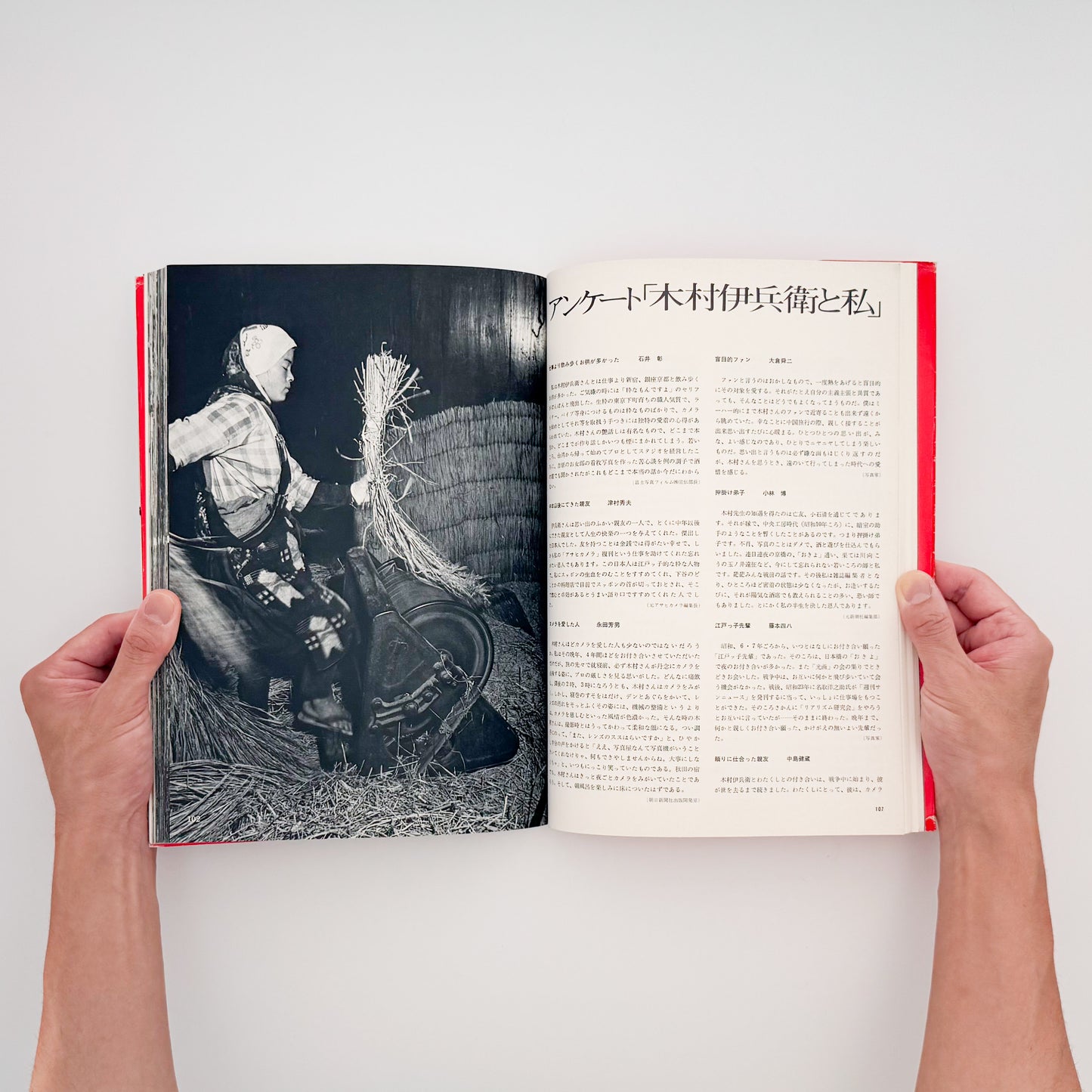
A photobook compiling "Akita," one of Ihei Kimura's representative post-war works, published as Volume 4 of Nikon Salon Books.
Ihei Kimura was deeply drawn to the farming villages around Omagari, Akita Prefecture, which he visited in 1952 for a photo review, and continued to photograph them repeatedly thereafter. This book includes the daily lives of people living in snow-covered villages, women and children waiting for men who went to work elsewhere, and festivals and community activities.
Known as a representative series of post-war Japanese photography, "Akita" is not merely a record of farming villages. It captures the lives and dignity of people rooted in the land, and Ihei Kimura himself stated, "I became a human being through photographing Akita." The closeness to his subjects and their natural expressions reveal Kimura's deep gaze at humanity, which he pursued throughout his life.
This book features a refined layout by Yusaku Kamekura, and at the end of the book, there are discussions by related parties such as Jun Miki, a chronology, and photo explanations.
[Title] Akita (Nikon Salon Books 4)
[Publisher] Nikkor Club
[Date of Publication] 1978
[Number of Pages] 136 pages
[Size] Approx. 300*210*10mm / 679g
[Format] Softcover
[Language] Japanese
[Title Reading] Akita
[Author/Editor, etc.] Ihei Kimura/Photography, Jun Miki/Editorial Cooperation, Nobuo Ina/Contribution, Yusaku Kamekura/Layout
[Printing] Toppan Printing/Printing & Binding
[ISBN] -
[Condition] Used [3] Good- (Cover: slight damage to top and bottom edges, scuffs, Pages: slight age-related tanning on edges)
[Accessories] -
[Featured In] -
[Related Exhibitions] -
Ihei Kimura (1901-1974)
Born in Taito Ward, Tokyo. Photographer.
Began his career as a photographer in the 1920s. Active in a wide range of fields including photojournalism, snapshots, and portraits, leaving a significant mark on the development of Japanese photography.
In 1933, he joined Nippon Kobo with Yonosuke Natori and others, promoting journalistic expression through photography. After the war, he gained high acclaim for his light-footed snapshots and portraits using a Leica. In the 1950s, he produced his representative work "Akita," which photographed farming villages in Akita, and in his later years, he published a series of works taken in Paris.
His representative works include "Akita," "Paris," "Journey to China," and "Photographs for Leica by Leica."
His major awards include the Photographic Society of Japan Distinguished Service Award (posthumous), and the Ihei Kimura Photography Award was established in his honor.
His major collections are held at the Tokyo Photographic Art Museum, the National Museum of Modern Art, Tokyo, the Yokohama Museum of Art, and the Japan Camera Museum, among others.
< Related Figures >
Ken Domon, Yonosuke Natori, Jun Miki, Yusaku Kamekura, Hiroshi Hamaya, Kazuo Kitai